
PRODUCT

Open State Cavity Barrier System
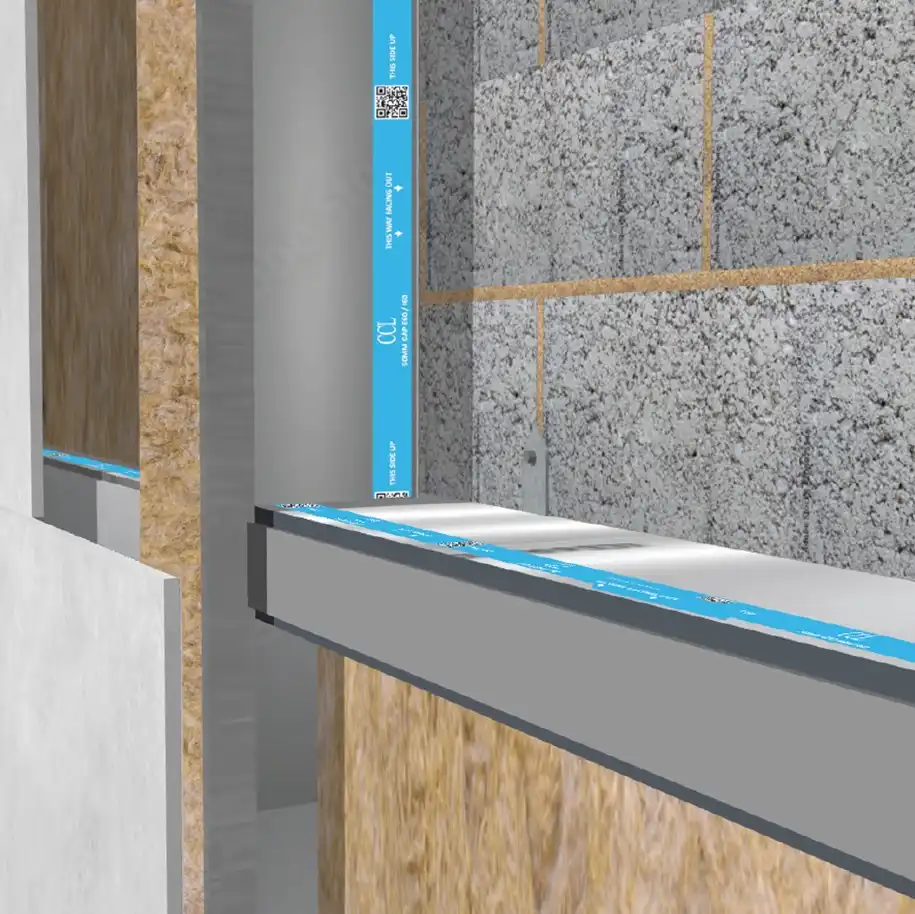
The CCL Open State Cavity Barrier System is designed to prevent the spread of fire and smoke in open state cavities where a continuous vented air layer is required within the facade design.
The CCL OSCB System comprises the CCL Horizontal Rainscreen Cavity Barrier (HRCB) and the CCL Vertical Rainscreen Cavity Barrier (VRCB) combined to create a fire barrier system designed for use in ventilated facades, with cavities up to 300mm, where either 25mm or 50mm ventilated air layers are specified.
The CCL OSCB System is manufactured from high density, non-combustible rock mineral wool with the horizontal element combining a heat activated, high expansion intumescent layer designed to close off the vented air layer required in open state facades upon activation.
Suitable for use on masonry and SFS wall types, the CCL OSCB System achieves fire ratings ranging from 60 to 180 minutes integrity and insulation.
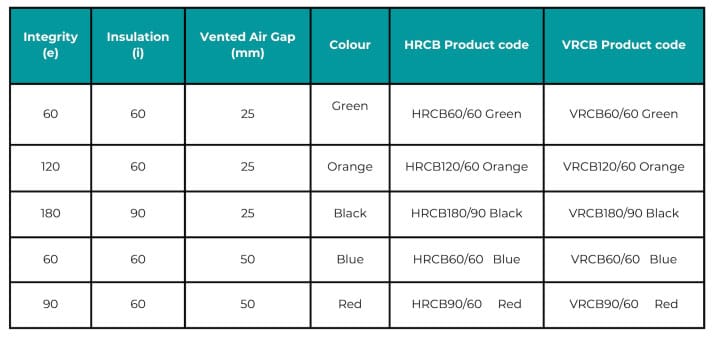
The CCL OSCB System is manufactured to suit the required cavity width and are colour coded according to the performance of the system to aid specification, ordering and on site identification.
The CCL OSCB System has been tested in accordance with the principles of BS EN1363-1, ASFP TDG19 and EN 1366-4, 2021
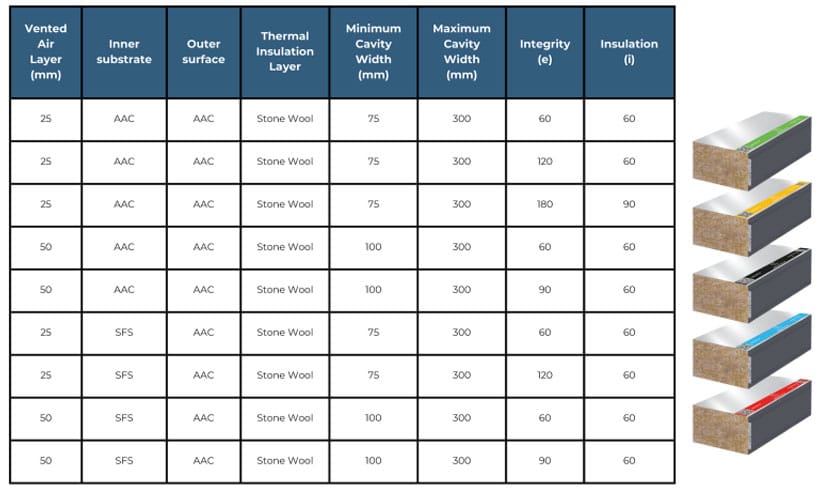
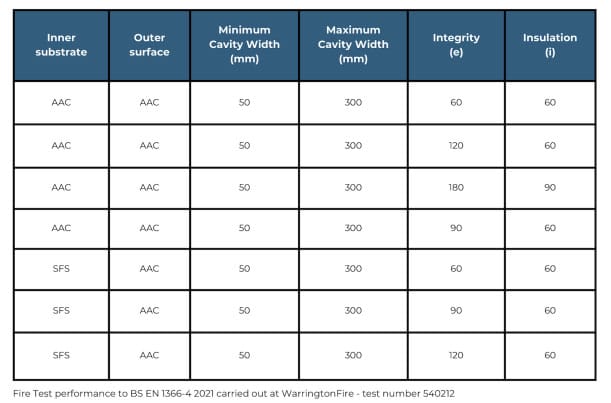
The CCL OSCB System can be easily specified, ordered and identified using the unique colour coding, which is applied on the uppermost surface of the horizontal element and on the edge of the vertical element. This colour coded band contains information on the fire performance, suitable air gap and some basic instructions along with a QR code linking back to the BSI. Identify database which contains all of the appropriate documents for installation and performance.
Bracket Selector
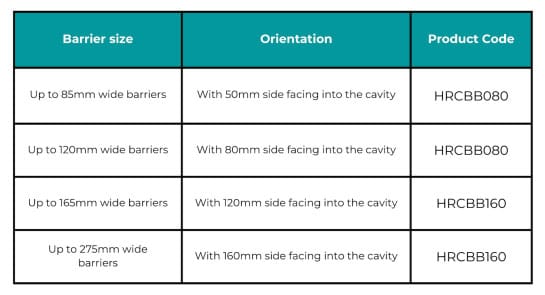
The HRCB element of the CCL OSCB System is supplied with two brackets per length, Further brackets will be required for cuts, corners and protrusions, Please use the table below to select the correct bracket.
Installation – VRCB
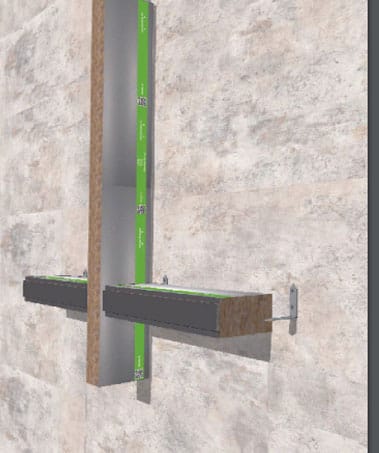
The CCL VRCB is designed to be installed under compression across the cavity void at no less than 5mm and should be installed prior to the HRCB, in a continuous vertical layer, ensuring all of the joints are tightly butted and taped.
The CCL VRCB is secured to the inner substrate by either friction fitting or mechanically fixed using the foldable fixing brackets with an appropriate fixing for the substrate type.
For mechanical fixing, the foldable brackets are folded/bent to the required size and secured to the substrate. The VRCB is pushed onto the bracket at the mid point ensuring the barrier is penetrated by the bracket to a minimum of 60% and is secured firmly against the inner structure.
For friction fitting, The VRCB should be installed as the substrate and the facade is progressed, ensuring the barriers are installed under compression as detailed above.
Should any small gaps (<5mm) be present due to substrate tolerances, they should be filled using intumescent mastic.
All joints should be sealed with CCL foil tape before installation of the CCL VRCB commences.
Product Identification
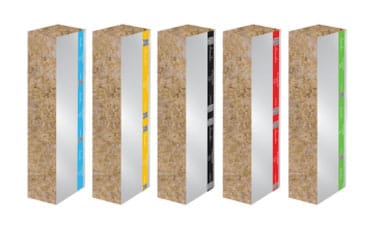
Prior to installation, the CCL VRCB should be checked to ensure the performance matches the project requirement.
This can be carried out quickly onsite by checking the colour of the strip applied to the surface of the barrier, which details the fire performance.
For mechanical fixing, the foldable brackets are folded/ bent to the required size and secured to the substrate. The VRCB is pushed onto the bracket at the mid point ensuring the barrier is penetrated by the bracket to a minimum of 60% and is secured firmly against the inner structure.
Installation – HRCB
The CCL HRCB range should be mounted on brackets to the inner structural surface, using the CCL multi bracket at a minimum of two per linear metre, or at a maximum of 500mm centres.
The CCL Multi bracket is secured to the inner surface using appropriate fixing for the substrate.
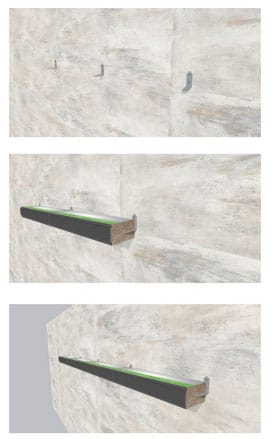
The cavity barrier is then pushed onto the bracket at the mid depth (thickness) point, with the intumescent layer facing into the open cavity/airspace.
Ensure the barrier is penetrated with the multi bracket to a minimum of 60% and is secured firmly against the inner structure, aiming for zero gaps between the barrier and the substrate.
Should any small gaps (<5mm) be present, due to substrate tolerances, they should be filled using intumescent mastic.
All joints with subsequent lengths of barrier, or at junctions with support rails and vertical barriers, must be tightly butt-jointed ensuring there are no gaps.
The upper joint should be sealed with CCL foil tape, taking care not to apply tape over the intumescent layer.
Once installation is complete the CCL HRCB should be checked to ensure there are no gaps, that the joints are sealed as above, and that the intumescent layer is free from restrictions or obstructions which may prevent it from expanding.
Product Identification
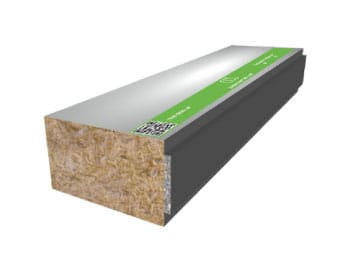
Prior to installation, the CCL HRCB should be checked to ensure the performance matches the project requirements.
This can be carried out quickly onsite by checking the colour of the strip on the upper surface of the barrier, which details the fire performance as well as the air gap as shown opposite.
Additionally, the CCL HRCB contains information showing the correct orientation for the barrier to be installed, along with the QR code linking to the BSI. Identify database, where MSDS, full installation instructions and other useful information are available for download as required.
Disclaimer
It is the responsibility of the customer to make the final choice when selecting products for use in construction projects. CCL provide data in good faith, however the information provided is not a recommendation and decisions are not carried out by CCL. Where relevant, CCL products should be installed in-line with test certification and in build-ups that match the specific test. In presenting any technical information we cannot claim to serve in any but an advisory capacity and can undertake no liability since the actual conditions and circumstance of use are beyond our control.
All product data is managed by Concept Conversions Ltd.. Please see Terms of Use for CCL.